


You don’t always need a professional to clean your dryer vent — for short, straight, accessible runs, a careful homeowner with the right kit can do a solid job. This DIY dryer vent cleaning guide walks you through exactly how to clean a dryer vent yourself, step by step — and just as importantly, tells you when to put the brush down and call a pro.
Tools You’ll Need
- Dryer vent brush kit with flexible rods (sized for 4-inch duct)
- Power drill (most kits chuck into a standard drill)
- Vacuum with hose attachment or shop vac
- Screwdriver (for the vent clamp)
- Work gloves and a dust mask — old lint is nasty stuff
- Flashlight
A decent kit costs less than a single professional visit and lasts for years of annual cleanings.
Safety First: Unplug and Shut Off
- Electric dryers: unplug the dryer completely. Not “turned off” — unplugged.
- Gas dryers: shut off the gas supply valve behind the dryer. If you smell gas at any point, stop, leave, and call your gas utility. Gas dryers with blocked vents also carry carbon monoxide risks — take this seriously.
- Let the dryer cool completely if it’s been running.
Step-by-Step: Cleaning the Vent
Step 1 — Pull the dryer out
Slide the dryer away from the wall carefully, watching the power cord, gas line, and vent hose. Give yourself comfortable working room.
Step 2 — Disconnect the transition hose
Loosen the clamp where the hose meets the dryer and the wall duct. Inspect the hose: if it’s crushed, kinked, or made of flimsy foil or plastic, plan to replace it — see why in our rigid vs. flexible duct guide.
Step 3 — Vacuum the dryer’s vent outlet
Vacuum lint from the dryer’s exhaust port and as far into the wall duct as your vacuum hose reaches.
Step 4 — Brush the duct from inside
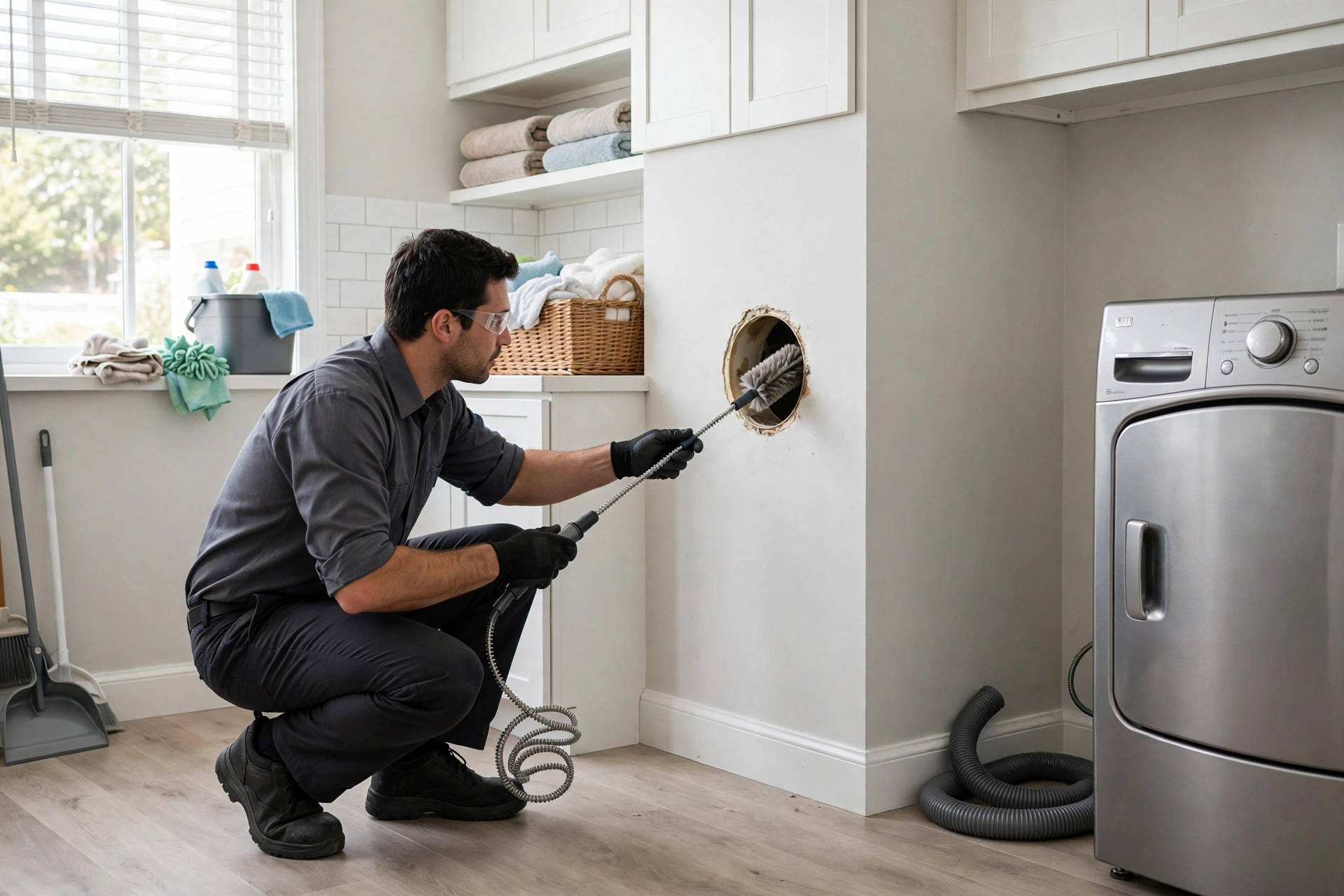
Feed the brush rods into the wall duct, adding sections as you go, and run the drill on low speed while slowly pushing forward. The brush scrubs lint off the duct walls. Work the full length until the brush exits — or until you meet resistance you can’t safely clear.
Step 5 — Brush from the outside
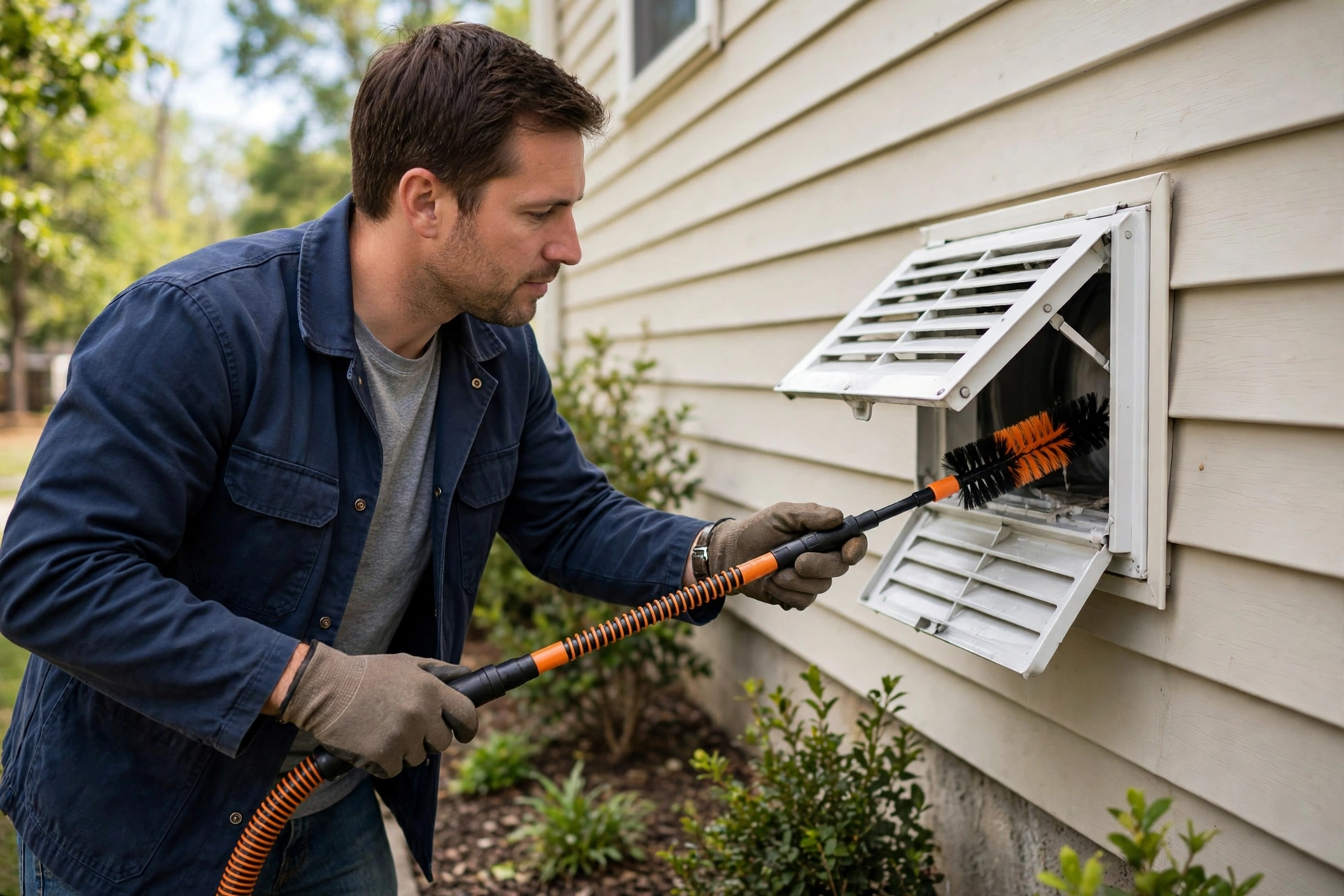
Go to the exterior vent hood, remove any cover, and brush inward. You’ll often pull out the worst packing from this end — plus spot bird nests before they become a crisis.
Step 6 — Vacuum everything again
Vacuum both ends thoroughly to remove everything the brush knocked loose.
Step 7 — Reconnect and test
Reattach the hose with the clamp snug (not crushed), push the dryer back without kinking the hose, restore power/gas, and run the dryer empty for 10 minutes. Then check: strong airflow at the outside hood means success.
Cleaning the Outside Vent Hood
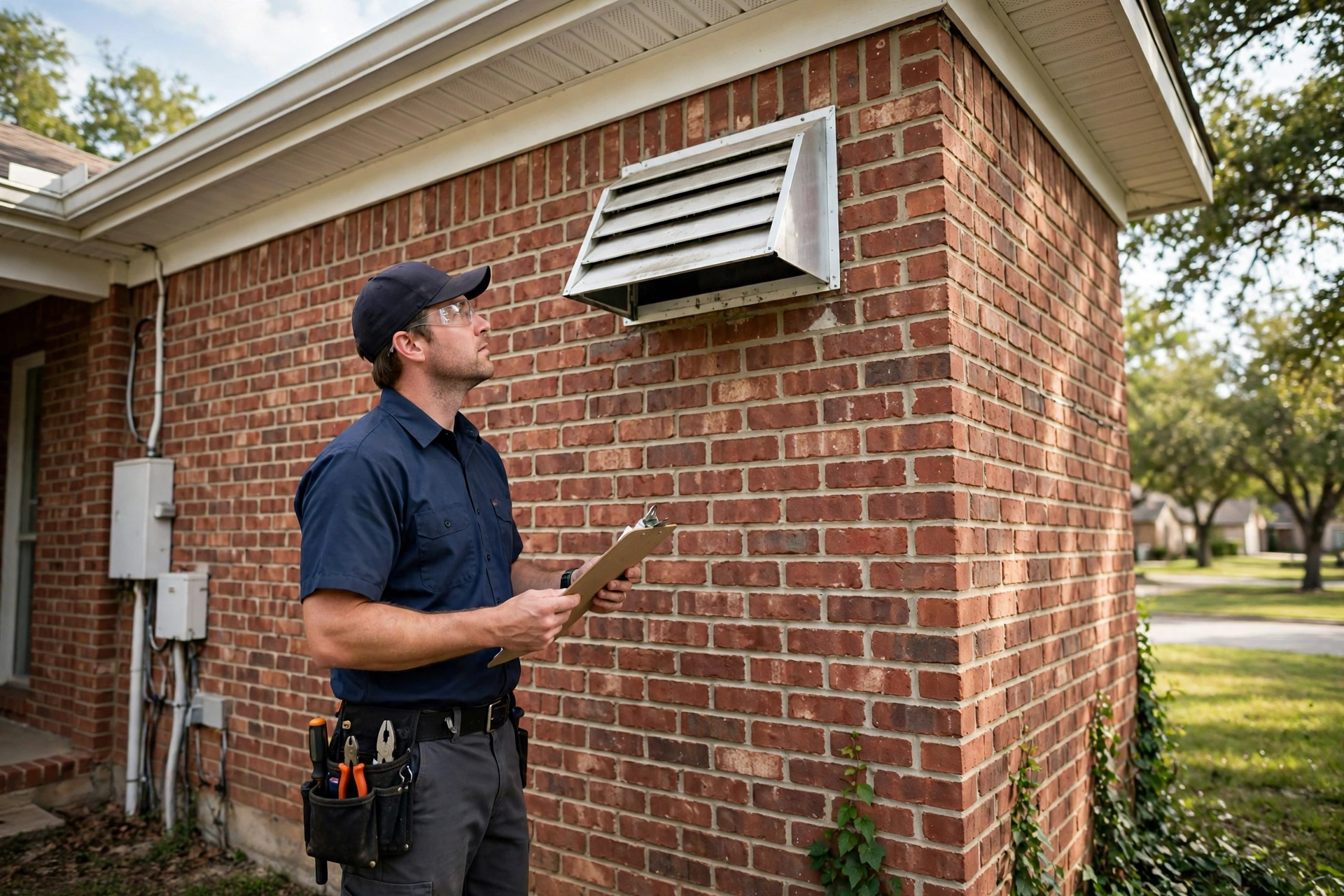
While you’re outside: clear lint caked around the hood, confirm the flapper or louvers open freely and close fully, and check for corrosion — a real issue in humid coastal climates like Charleston, SC. A stuck-open hood invites pests; a stuck-shut hood chokes airflow.
Testing Your Airflow
The simplest test: with the dryer running on high heat (no clothes), the outside hood should push a strong, warm stream of air. Weak flow after a full DIY cleaning means the blockage is somewhere you can’t reach — deep in a wall run, around multiple elbows, or up a roof termination.
When DIY Isn’t Enough: Call a Pro
- Vent runs longer than about 15–20 feet or with multiple bends
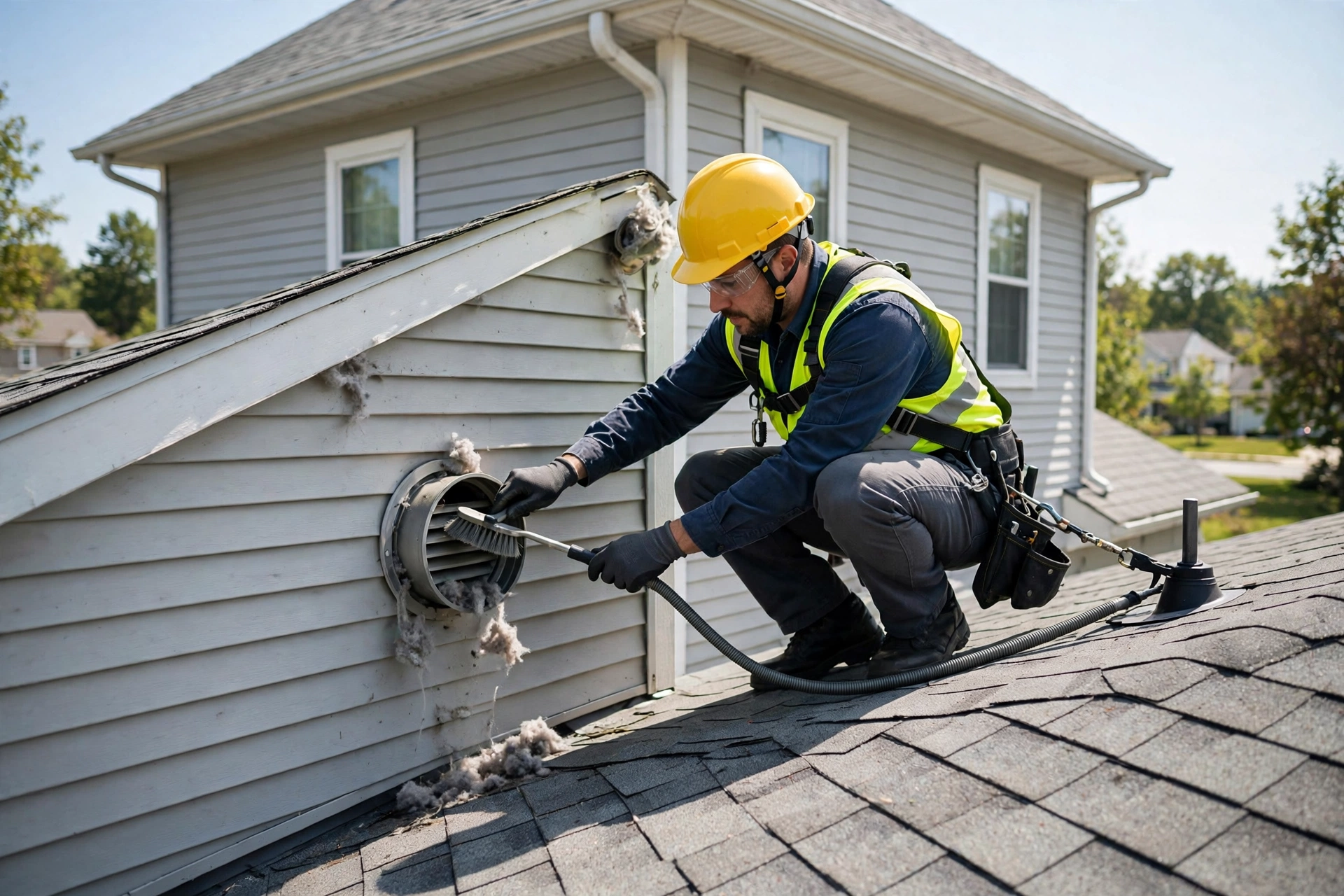
- Roof-terminated vents (ladder + roof work + deep vertical runs)
- Bird nests or pest infestations
- Foil or plastic ducting that needs upgrading to rigid metal
- Weak airflow persists after your cleaning
- You smell gas at any point — stop immediately
Professionals use rotary brush systems with cameras that reach 30+ feet and verify the result. Know what you’re paying for in our dryer vent cleaning cost guide for Texas.
Frequently Asked Questions
How often should I DIY clean my vent?
Same schedule as professional cleaning: annually for most homes. See our Texas cleaning schedule to dial in your interval.
Can I use a leaf blower instead of a brush kit?
It’s better than nothing for loose lint, but blowers don’t scrub the caked-on layer that actually restricts airflow — and they can pack lint tighter around bends. Brush kits are the real tool.
Is it safe to clean a gas dryer vent myself?
The vent cleaning itself is the same, but shut off the gas supply first and never work on the gas connection itself. When in doubt, call a pro.
Too long or on the roof? Call a pro. DIY handles the easy runs — for everything else, here’s what professional cleaning costs in Texas.