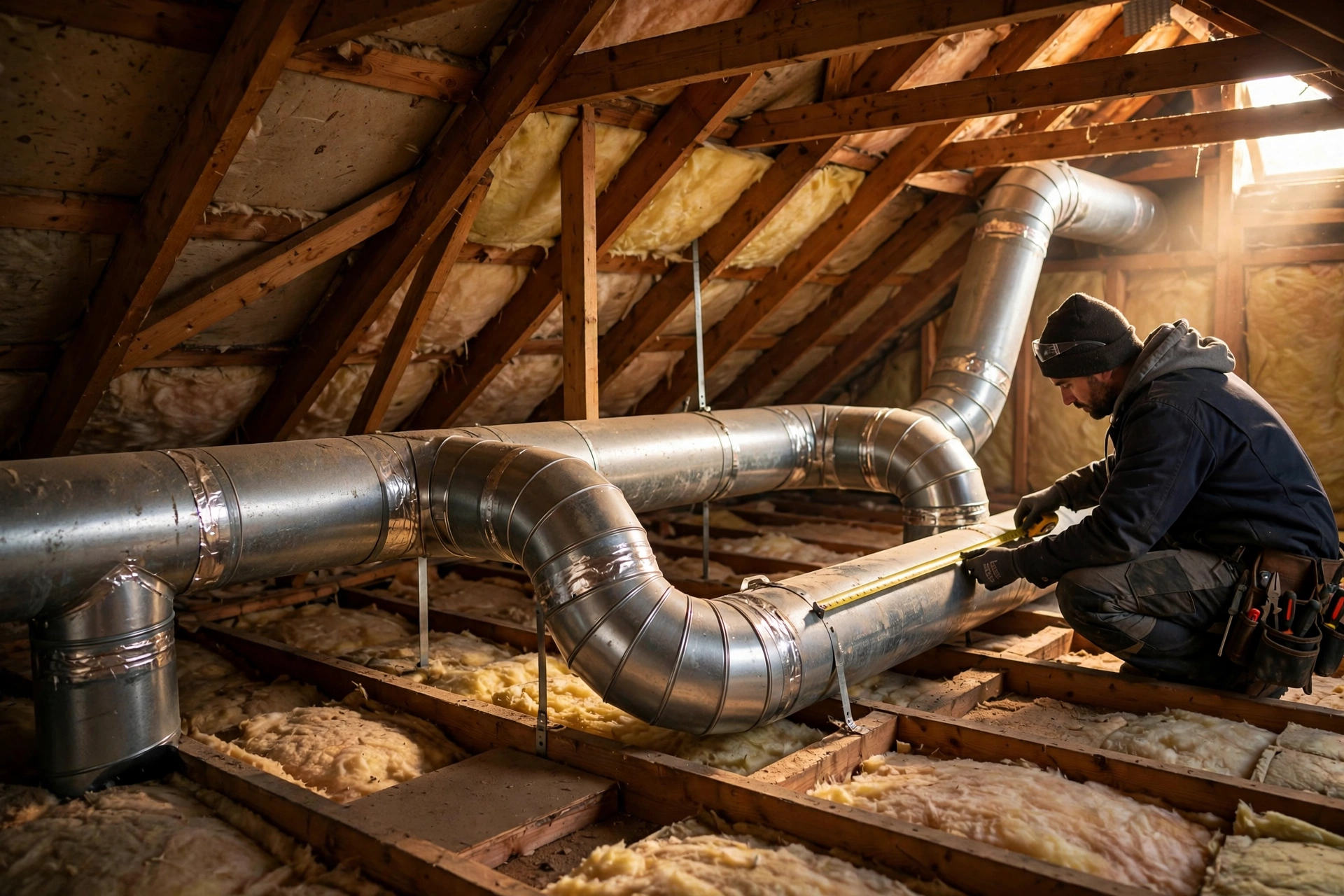




Behind your dryer, one humble component decides whether lint flows harmlessly outside or builds into a fire hazard: the duct. The rigid vs. flexible dryer vent debate isn’t about preference. It’s about safety, airflow, and what the building code actually allows. So here’s an honest comparison of every common dryer vent duct type and what to choose.
Types of Dryer Vent Duct
- Rigid metal duct: smooth-walled aluminum or galvanized steel pipe, the gold standard.
- Semi-rigid metal duct: flexible but metal-walled; acceptable for short transition connections behind the dryer.
- Foil flex duct: thin aluminum-foil accordion hose — common, cheap, and problematic.
- Plastic/vinyl duct: white or clear flexible hose — dangerous and code-prohibited for dryer exhaust.
Rigid Metal Duct: Pros and Cons
Pros: smooth interior means lint has almost nothing to catch on. It resists crushing when you push the dryer back. It’s non-combustible, meets every code, and lasts decades.
Cons: harder to install, since you must cut sections to length, join them with clamps, and route them thoughtfully. Less forgiving in tight spaces, and slightly higher material cost.
Verdict: for any concealed run — inside walls, ceilings, attics — rigid metal is the only correct choice, full stop. Therefore, never hide flexible duct inside a wall.
Semi-Rigid and Foil Transition Ducts
The short connector between your dryer and the wall duct is the transition duct, and this is where semi-rigid metal earns its place. It flexes enough to connect easily, yet holds its shape and won’t crush flat when you push the dryer back.
Thin foil flex duct, by contrast, is the most common problem we see behind dryers. Its ribbed interior traps lint in every corrugation, it crushes easily (choking airflow to a trickle), and it tears. If that’s what’s behind your dryer, replace it. In fact, it’s the single highest-value upgrade in this entire article.
Why Plastic Duct Is a Problem
However, code prohibits plastic and vinyl dryer hoses for good reason. They’re flammable, they sag and trap lint, and they can melt or ignite under sustained dryer heat. If you find white plastic hose anywhere in your dryer exhaust path, replace it with metal immediately. Don’t wait for a cleaning appointment.
What the Building Code (IRC) Says
Fortunately, the International Residential Code (IRC Section M1502) is clear:
- Dryer exhaust ducts must be metal with a smooth interior finish.
- Minimum diameter: 4 inches.
- Support ducts properly and keep them independent of other exhaust systems.
- Code prohibits screens at termination — use a proper damper/hood instead (see our vent cover guide).
- Maximum developed length: 35 feet, reduced for bends — explained fully in our maximum vent length guide.
Upgrading Your Duct: What to Expect
A typical upgrade replaces the transition hose and any accessible foil/plastic concealed duct with rigid metal. Specifically, the technician measures and cuts sections, joins them with clamps, and seals joints with foil tape (not screws, not duct tape). Screws must not protrude into the airflow. Then the technician supports long runs and verifies airflow. It’s usually a half-day job, and it permanently improves both safety and dryer performance. Factor it into dryer vent service costs as a one-time investment.
Frequently Asked Questions
Is flexible foil duct actually dangerous?
It’s not as bad as plastic. However, it’s a meaningful downgrade from rigid metal. It traps lint, crushes easily, and degrades. Fine as a short transition in a pinch; bad as a concealed run.
Can I connect rigid duct directly to my dryer?
Instead, leave a short semi-rigid transition section. Dryers vibrate, and a fully rigid connection transmits that vibration — and makes pulling the dryer out miserable.
How do I know what duct I have?
First, pull the dryer out and look. Shiny smooth pipe = rigid metal (good). Flexible silver with visible ribs = foil (upgrade it). White/clear plastic = replace immediately.
Finally, upgrade your dryer duct to rigid metal and stop fighting lint — then keep it clean with annual cleanings on the right schedule.