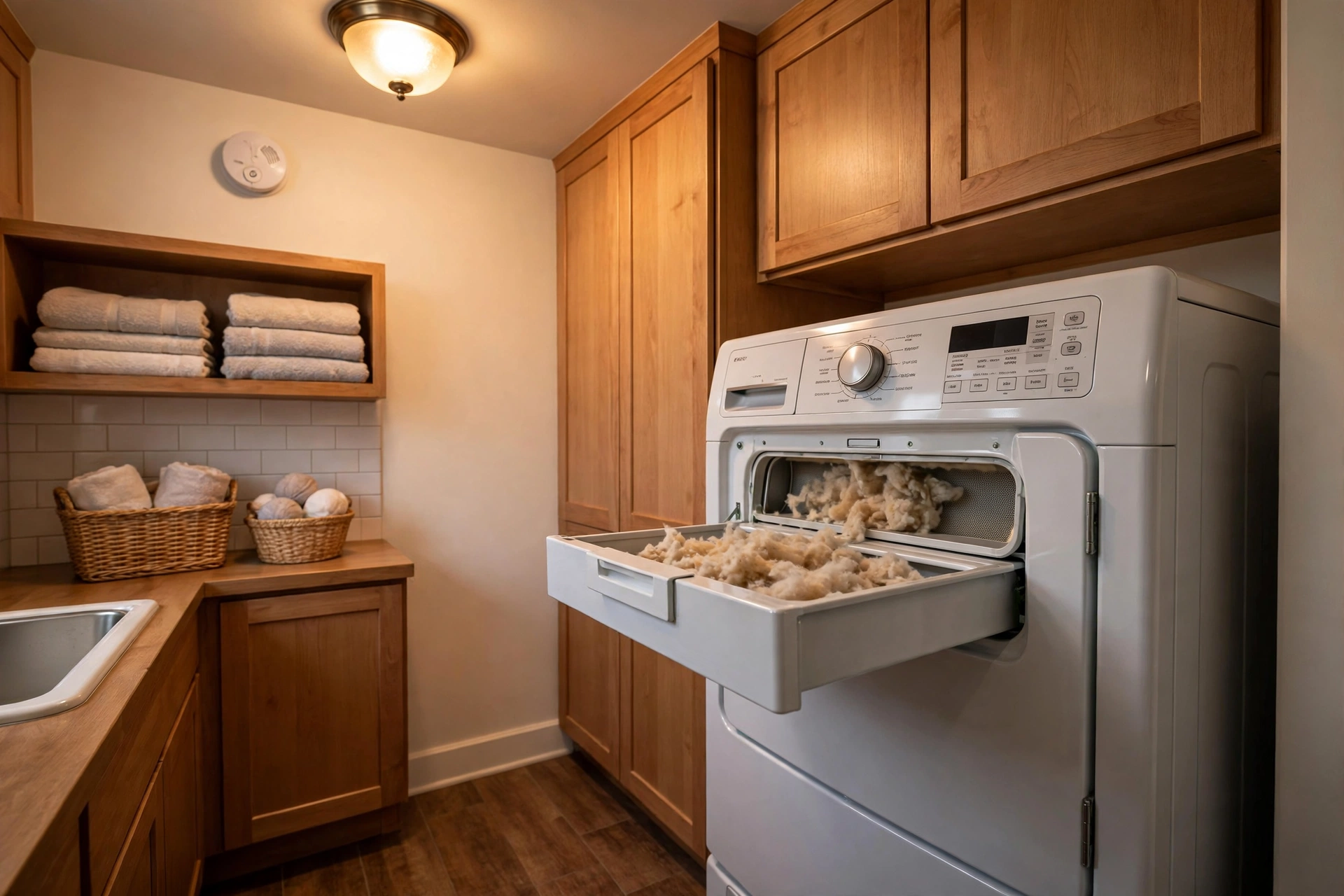


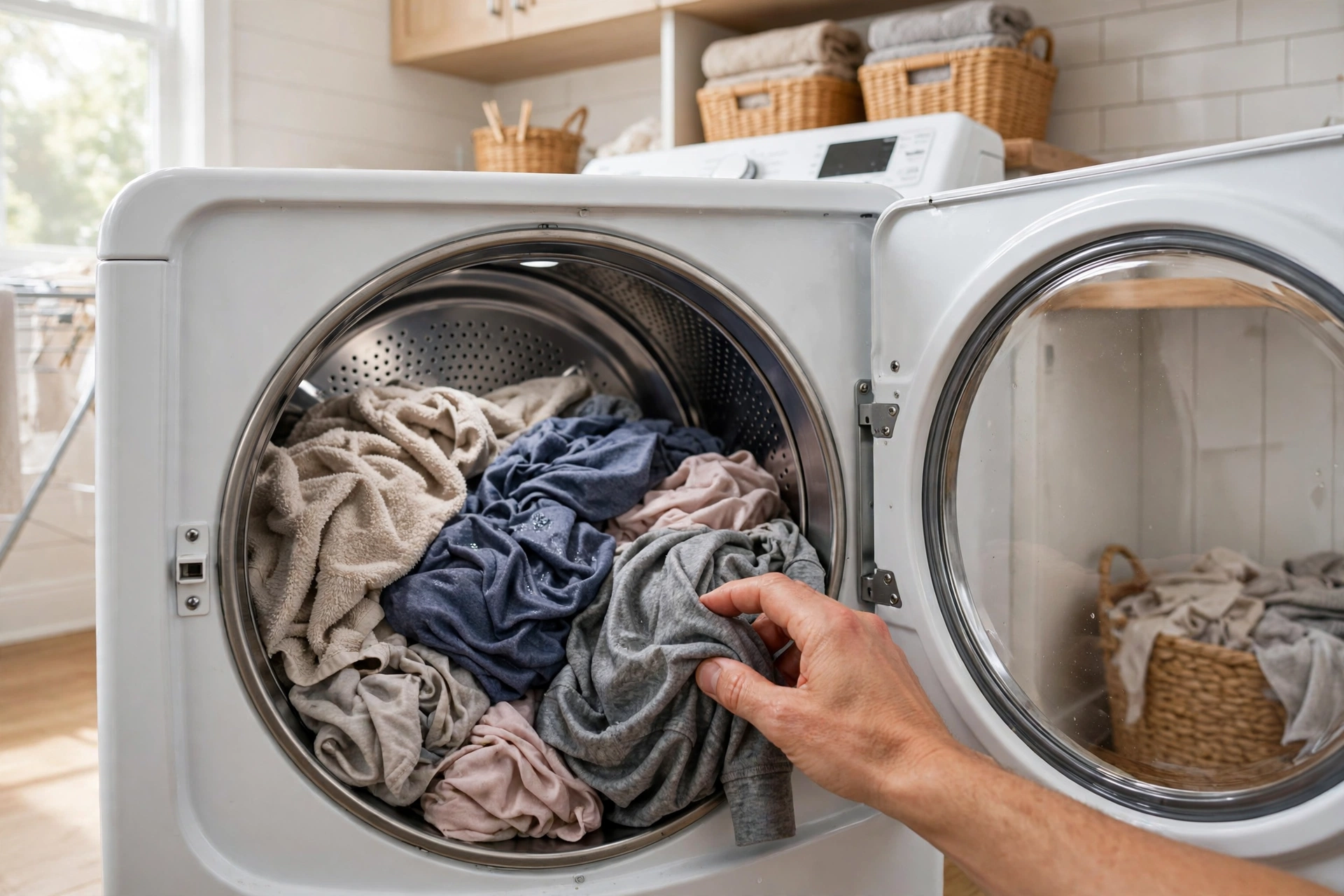

Clothes still damp after a full cycle? First, before you assume the dryer is dying, know this: a dryer taking too long to dry is most often a vent problem, not a dryer problem. In fact, restricted airflow is the single most common cause of marathon dry times — and it’s also a fire warning. Therefore, walk through these 8 causes in order, and you’ll usually find the culprit before spending a dollar on repairs.
Start With the Vent — It’s the Cause Most of the Time
Dryers don’t dry with heat alone; they dry by moving hot air through the clothes and exhausting the moisture outside. As a result, anything choking that airflow — lint-packed duct, crushed hose, stuck vent hood — forces the dryer to run longer and hotter to do the same job. That’s why vent restriction is suspect number one. If you haven’t had the vent cleaned in over a year, start with our cleaning schedule guide and the 10 warning signs of a clogged vent.
8 Causes and Fixes, in Order of Likelihood
1. Clogged vent duct (most common)
Fix: first, check airflow at the outside hood while the dryer runs — weak flow means a blockage. Then clean the full duct run (see our DIY guide) or book a professional cleaning.
2. Crushed or kinked transition hose
Fix: next, pull the dryer out and inspect the hose behind it. Straighten kinks; replace crushed foil hose with semi-rigid metal — our duct comparison explains why.
3. Clogged lint screen
Fix: also, clean after every load, and monthly wash the screen with soap and water — invisible dryer-sheet residue blocks airflow even when the screen looks clean. Run water through it: if it pools, scrub.
4. Overloaded dryer
Fix: after all, hot air needs room to circulate. Split giant loads in two — two medium loads dry faster than one stuffed one.
5. Wrong cycle or heat setting
Fix: for instance, heavy cottons on low heat, or eco modes that throttle temperature, take far longer. Match the cycle to the load, and check that the dryer is actually heating (no heat at all = different problem).
6. Blocked exterior vent hood
Fix: in addition, inspect the outside hood for lint packing, a stuck flapper, corrosion, or a bird nest. Clear it and confirm the damper moves freely.
7. Vent run too long
Fix: finally, long runs with multiple elbows may exceed what the dryer can push through — check against maximum vent length rules. A booster fan or reroute may be needed.
8. The dryer itself
Fix: otherwise, if airflow is strong and the vent is clean but clothes still won’t dry, suspect the heating element, thermal fuse, or thermostat — that’s appliance-repair territory, not a vent issue.
The Quick Airflow Test
To test, run the dryer empty on high heat for 5 minutes. Outside at the vent hood, you should feel a strong, warm blast of air. Weak, lukewarm flow = restriction somewhere in the path. In short, this 5-minute test settles the “vent or dryer?” question in most cases.
The Energy Cost of a Clogged Vent
Unfortunately, a dryer working against a restricted vent can use 30%+ more energy per load and take twice as long. Multiply that across a year of laundry and the wasted electricity alone often exceeds the cost of an annual cleaning (see what cleaning costs in Texas). Then add the accelerated wear on a $800+ appliance.
Frequently Asked Questions
Why do my clothes dry on one side of the dryer but not the other?
Specifically, this is a classic poor-airflow pattern — hot air isn’t circulating. Check the vent and don’t overload.
Does a clogged vent affect gas dryers differently?
The drying symptoms are the same. However, blocked gas-dryer vents add a carbon-monoxide risk — see our gas dryer safety guide.
My dryer is new and still slow. Why?
In other words, new dryer + old vent = the vent was the problem all along. This is extremely common after dryer replacements.
Above all, rule out the vent first — it’s the cause more often than not, and a cleaning is cheaper than a repair call.